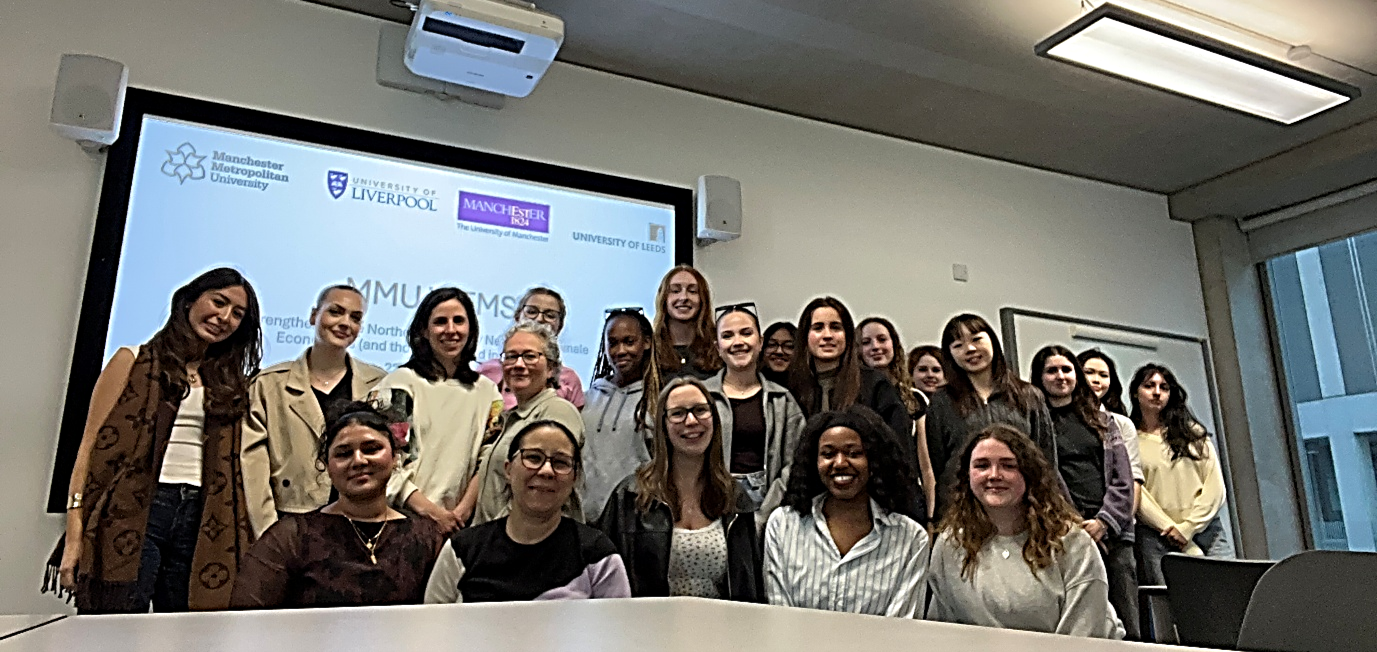
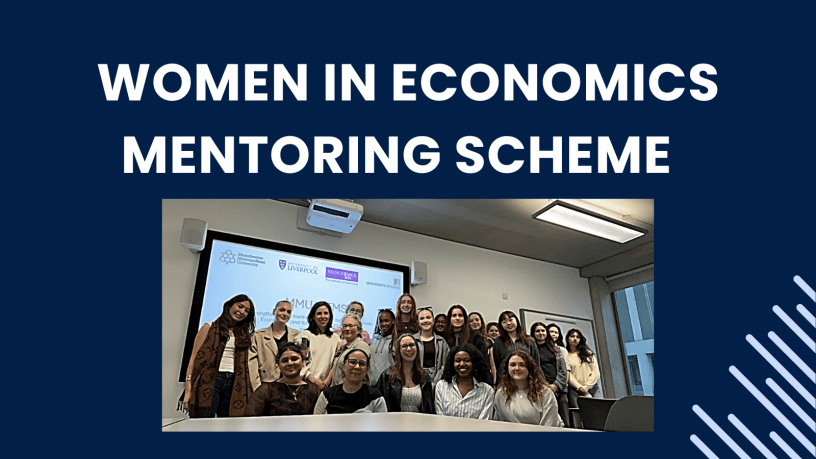
Women in Economics Mentoring Scheme (WEMS) was established two years ago to support female economics students, to provide a safe networking space for them to discuss economics and issues that affect them and which they are passionate about, to develop their ideas and to meet and be inspired by professional and academic women working and researching within the economics space.
Our second year ended with two inspiring events.
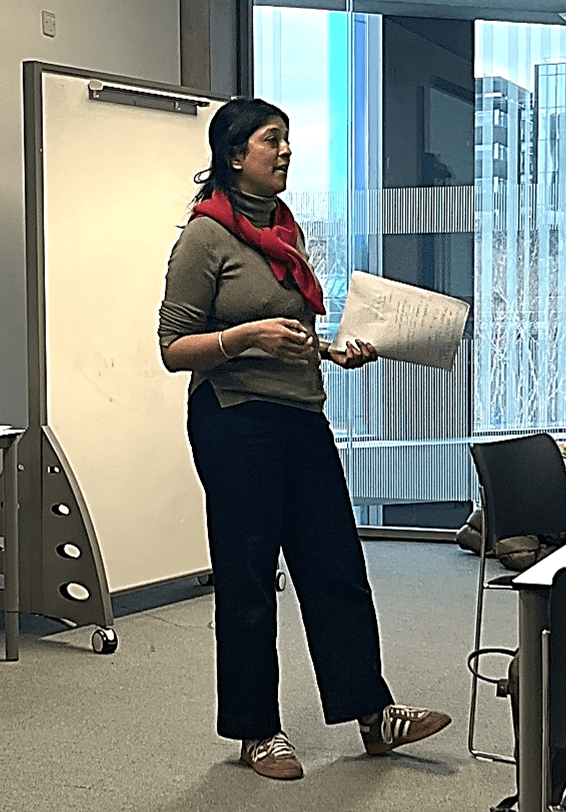
In February, we were very pleased to welcome Dr Danisha Kazi, Chief Economists at Pos+tive Money. We also welcomed a group of female economics students from the University of Liverpool along with their Programme Lead, Dr Yontem Sonmez, to join this WEMS event.
Danisha delivered an engaging and informative presentation during the first hour, where the students learned about the work of Pos+tive Money – an international organisation that advocates for a just and greener global economic system.
The title of Danisha’s talk was Democracy and Finance, and she spoke passionately about the need to reconfigure the current economic system to a model that is fair and just and works for all people and the planet. The problems we face, explained Danisha, originate from the concentrated power that exists with the Bank of England, the City of London, the wealthy elite and big corporations. Together their influence on successive governments, the direction of policy and decisions on where public money is spent has deeply affected how and where we live, work and play, and whether we can access healthcare, social care and affordable treatments.
The issues resonated with the students – a generation that is deeply affected by existential threats not of their making. Climate change, the cost-of-living crises and continued austerity policies that fuel the socio-economic inequalities are topics that our female economics students care about deeply.
Danisha ended by briefly underlining the challenges of our time and the uncertainties that Big Tech corporations are likely to have on the global economy, before introducing her report ‘Beyond Dollar Dominance’ that was published in 2025.
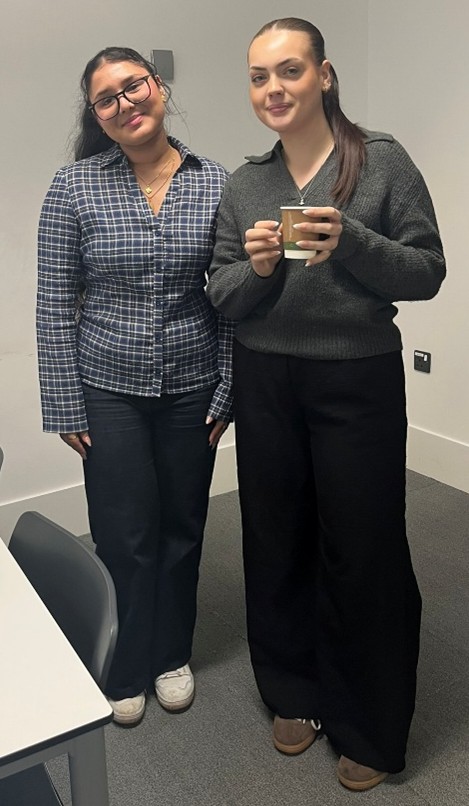
Lauren Payne and Satveer Kaur, our WEMS student ambassadors thanked Danisha for her inspiriting talk and then opened up the floor to questions.
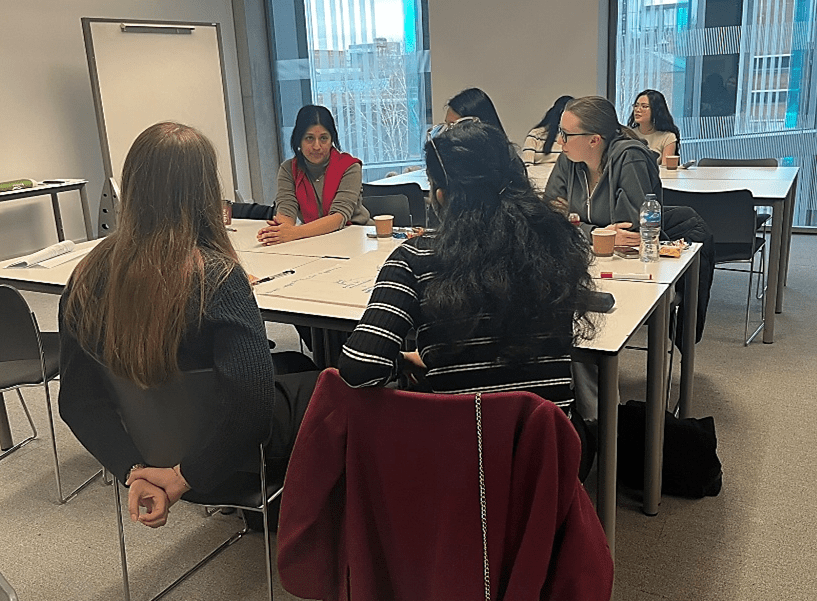
The final activity for the afternoon allowed the students some time to discuss and document their ideas and thoughts on economics, the challenges they feel most passionately about and potential solutions with Danisha.
Our final event in this second year of WEMS was a networking opportunity for MMU, the University of Liverpool and University of Manchester economics students and staff to develop a North West Network for Female Economics Students (and those interested in Economics). This was held in April.
We once again welcomed students from the University of Liverpool and their Programme Lead, Dr Yontem Sonmez. The Programme lead for economics at the University of Manchester, Dr Sofia Izquierdo Sanchez also came along to discuss how her students and the Sheconomics society can contribute to the network.
We discussed and agreed on a path to develop the WEMS Student Ambassador Programme, inspired by MMU 2nd Year economics student Lauren Payne. The ambassadors will be crucial in expanding the WEMS programme across the university network and creating a full programme of in-person and hybrid events.
Watch this space for further details on agreed objectives once our Ambassadors are in place.
The events are supported by the Department of Finance and Economics and the Dean of the Business School, Professor Hannah Holmes. A special thanks to Anna Egan, Head of the Finance and Economics for funding the refreshments and travel expenses for our guest speakers. Sophia and Julia and all WEMS participants are enormously grateful for your generosity and continued support.
Dr Julia Jeyacheya & Dr Sophia Kuehnlenz