
Why are fewer women choosing economics today than two decades ago? Despite outreach efforts, only 27% of UK economics undergraduates are women, down from 31% in 2002 (Discover Economics, 2023). This isn’t just a numbers issue; it reflects a deeper disconnect between how economics is taught and what many students value in their education.
Over ten weeks at the Department of Economics at Manchester Metropolitan University, I sought to understand why this gender disparity persists. My internship blended curriculum design with research: I analysed alumni data, updated outreach materials, and reviewed literature on how female students experience economics education. The findings were eye-opening, revealing systemic barriers, but also real opportunities for change.
The problem is not a lack of ability or interest. It is that economics, as it is currently structured, often fails to meet students where they are. My research highlighted three key barriers:
1. Access
Economics is still not offered in nearly half of non-selective state schools. Where it is available, it is often bundled with maths-heavy subjects, reinforcing the idea that it is only for a certain type of student. Girls are less likely to be encouraged to take it, and many never see a female economist in the classroom or curriculum.
2. Pedagogy
Even when women do enrol, traditional teaching methods can push them away. Competitive assessments, abstract theory, and a lack of applied content all contribute to disengagement. Yet the evidence is clear: female students thrive in environments that are collaborative, socially relevant, and emotionally resonant. Reflexive journaling, ethics-based modules, and scaffolded autonomy are not just progressive ideas. They are essential for engagement and retention.
3. Culture
Economics departments can feel like cold and unwelcoming spaces for women. The term “chilly climate” describes the subtle but persistent ways in which women are excluded — from seminar dynamics to mentorship gaps and a lack of visible role models. These are not isolated incidents. They are part of a wider culture that shapes who feels they belong.
But there is hope. During my internship, I saw reforms taking shape: inclusive reading lists, student-led learning, mentoring schemes, and a shift toward pluralist, feminist-informed pedagogy. I helped create outreach programs that reflected these changes and contributed to outreach content that tells a more inclusive story of what economics can be.
This experience taught me that change does not happen on its own. It happens when we rethink how we teach, who we centre, and what we value. Economics has the potential to be a space for ethical inquiry, social justice, and inclusive innovation. But only if we are willing to reimagine it.
References:
Discover Economics, 2023. Why economics? [online] Discover Economics. Available at: https://www.discovereconomics.co.uk/why-economics [Accessed 26 Oct. 2025].
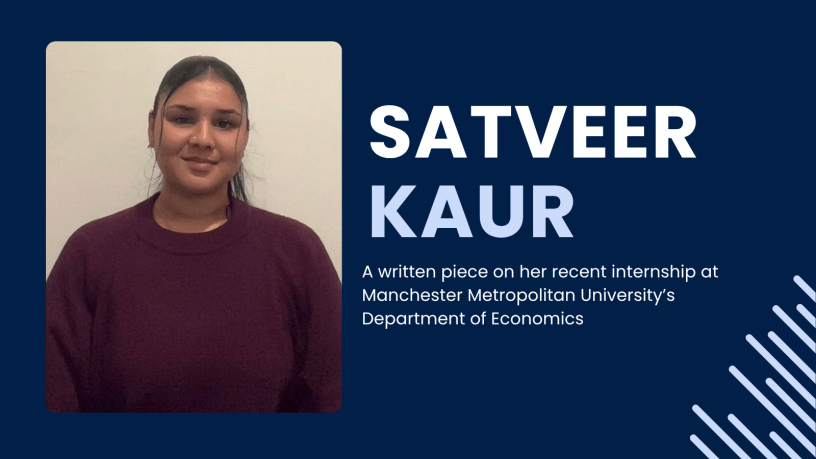
About the Author Satveer Kaur is an undergraduate student with a keen interest in inclusive education, feminist economics and curriculum reform. Her recent internship at Manchester Metropolitan University’s Department of Economics focused on understanding gender disparities in economics education and developing outreach strategies to foster greater diversity. She is passionate about reimagining economics as a discipline rooted in social relevance and ethical inquiry.

