
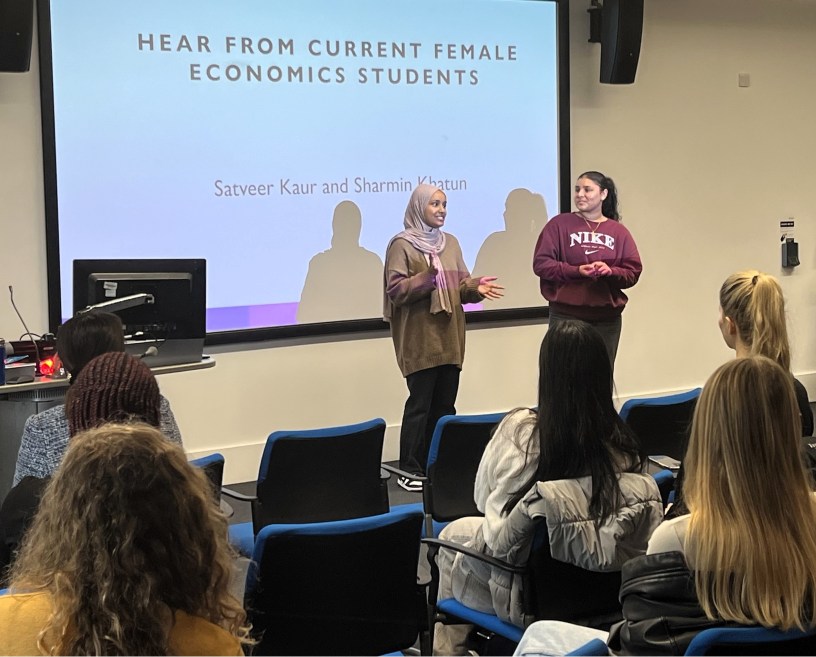
On 25th September the first event of the newly established Women in Economics Mentoring Scheme (WEMS) took place at the Business School.
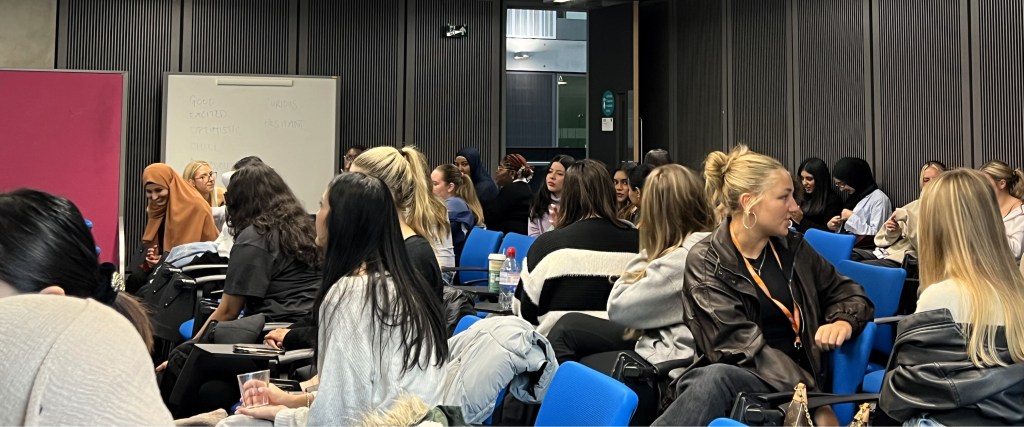
The interest in WEMS by our female students and staff exceeded all our expectations with more than 30 female economics students across years 1,2 and 3 who had signed up and attended the kick-off event at the Business School.
Leading female academics from the department of Finance and Economics were invited to come along to speak to the students to share their research interests and experiences as female leaders in the field of Economics and Finance. We would like to express our sincere thanks to Anna Egan, Head of the Finance and Economics Department and Dr Iwi Ugiagbe-Green, Reader in Accounting, alongside Sabaa Jahangir, Dr. Lin Lang, lecturers in Economics and Dr Katarzyna Werner-Masters, program leader in Economics, for their insightful and inspiring talks about their research and their experiences as women in the field. We would also like to take this opportunity to thank our two female students, Satveer Kaur and Sharmin Khatun, who did an incredible job at helping during the event and who were happy to share their insights of Economics from a female student perspective. And finally, we would like to express our gratitude to Liz Lufwa who took some amazing pictures during the event.
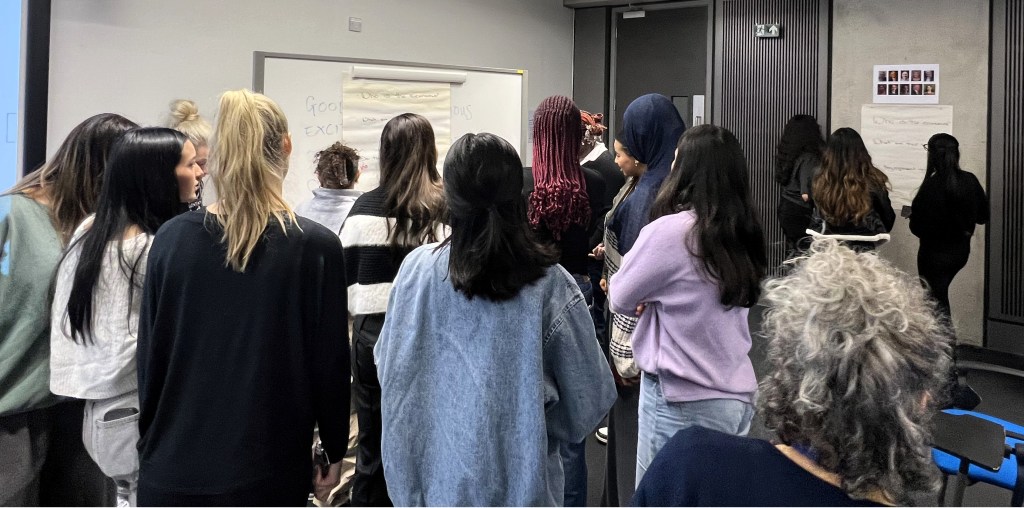
Throughout the event and in-between talks, we had lively discussions among students and staff concerned with female students’ perceptions of economics. Guided activities and feedback were used to understand the potential themes, aims, priorities and the value WEMS could have. These discussions and the feedback will be used to shape WEMS going forward.
What we found was that there is an extraordinary appetite to create a community of likeminded individuals within and beyond MMU. The emerging vision is one that shares the space WEMS will provide for social and academic activities including guest talks by female economists and female economics alumni to talk about their research and experiences after university.
Encouragingly, the participants expressed a real interest in taking ownership of WEMS and guiding its development through a wide range of activities that are promoted by them to the widest possible audience within and outside MMU. Female students clearly identified the value of such a scheme as being high, enabling them to connect to other women in the field, empower and support each other, feeling more comfortable studying economics knowing that they have a community of females to fall back on. Students also expressed a greater sense of belonging and the strong will to change the face of economics through such a scheme.
We aim to remove the barriers facing females in economics through WEMS in collaboration with the pioneering students who continue to help shape this important mentoring scheme. The second event of WEMS is planned towards the end of semester 1.
 Finance & Economics Hub